Natural products are winning in today’s market, a story of a young, local business gliding through the natural beauty community
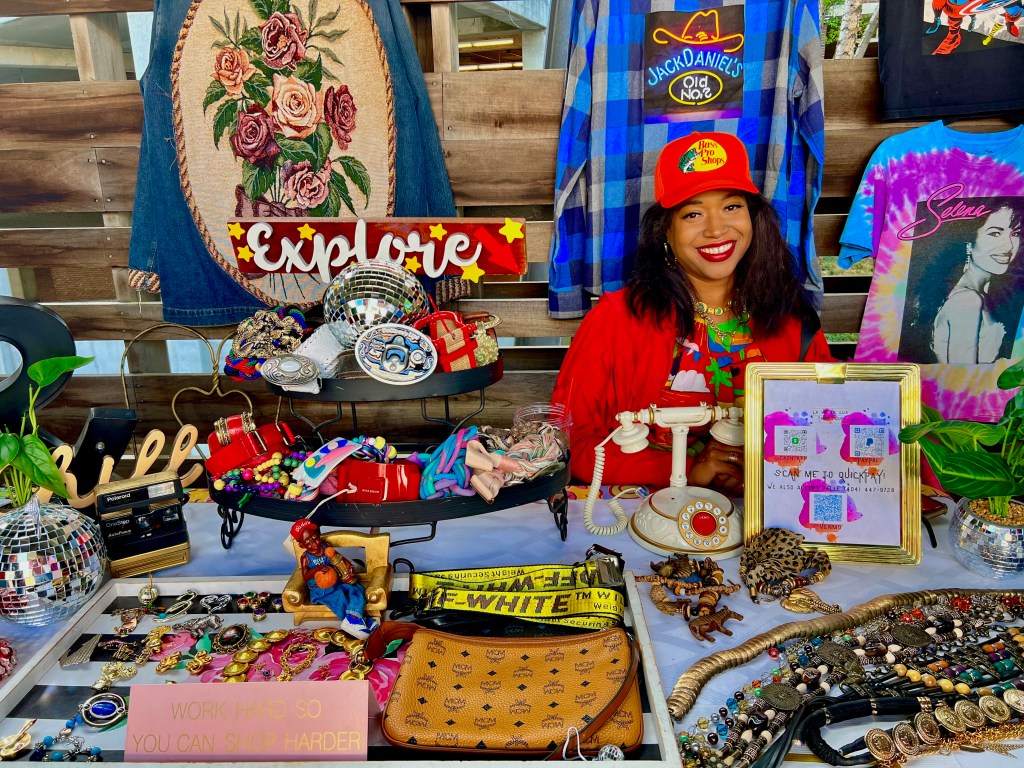
Everybody told her that her butters and creams worked so well on their skin and that she should sell them, so she did.
Wacera Kamawe is the founder of Kastone Natural Beauty founded and based in Atlanta, Georgia.
She graduated from the University of Alabama Birmingham with a Bachelor of Science in Respiratory Therapy. This provided her with a background in science and healing making her business a perfect match.
Kastone Natural Beauty specializes in all natural skin and body products from ethically and naturally sourced ingredients.
She developed her first product after she noticed that her hands were constantly dry after washing them so frequently. Having grown up in Kenya, her family had various natural remedies of healing dry skin and other skin problems.
After testing a variety of formulas she finally found the winning product.
She began to sell them in 2019, then quit her job to pursue it full time in 2021.
“I knew nothing about having a business, I’m kind of learning as I go”, she says.
Kamawe is very passionate about her business and she enjoys learning the ins and outs of entrepreneurship.
“It is very demanding especially right now because it is just me doing most of the tasks. It’s very demanding mentally, physically, emotionally… I never stop thinking about it so it could be midnight or 1 AM and I have ideas, I have to wake up and right stuff down.”
“The difficulties are knowing when to stop.”
She gives advice on how when pursuing entrepreneurship that you must maintain tunnel vision or you might get discouraged.
“People around you don’t want to see you do something that they don’t believe that they can do…listen to your inner voice, trust your intuition, learn from people that have done it before you and also don’t be a copycat, be yourself.”
She is a firm believer in putting yourself out there and advertising yourself.
“I’d prefer to have one return customer than a hundred one time customers.”
She mentions that when people use her products and recommend them to other people that is the best way that advertising works for her.
“People have to see it to believe it.”
“I like markets so people can interact with the products…smell, test and use it and walk around and come back and say that ‘oh it actually lasts.’”
Kamawe loves helping people, skincare and heath so combining both just made sense for her.
The emergence of natural skincare and beauty products has been very prominent within the last couple of years.
Many Americans are also eating healthier, buying locally, sustainably and naturally, so Kastone Natural Beauty only makes sense for the market today.
Kamawe’s natural sourcing of materials is what makes Kastone Natural Beauty so innovative and special.
A decline in tangible fun, progressive or unfortunate, a story about the public library

Over the course of the years, there has been the decline of many popular franchises such as Barnes and Noble’s downsizing or completely ceasing to exist like Blockbuster.
These niche stores that sell books and have sold movies cannot compete with markets like Amazon and Netflix. Similar to the decline of department stores since people no longer have to make trips to the mall for a coffee machine or a toaster oven when they can just order those things and other necessities with the click of a button.
So why have libraries lasted when it seems that every other niche establishment seems to be struggling due to big corporations like Amazon?
A library is a place where people can come together, enjoy a common space, use free Internet, print and learn simultaneously. With the total depletion of third spaces like arcades and slowly but surely malls, libraries have still remained a staple in many neighborhoods.
For parents, it is a cheap alternative for weekend fun and many libraries host public events like movie showings, after-school and even daycare services. Public libraries are operated under the county or city and they are government funded therefore there will always be a library nearby anywhere in the United States.
The U.S. Institute of Museum and Library Services has cut the funding of various libraries in 37 states since 2011.
“The tools and technology have changed, but libraries have always been innovative in responding to the needs of the community,” says Jim Neal, president of the American Library Association.
Around six in 10 Americans have been reported stating that they rarely or never visit their local library and 32 percent of the data surveyed never, according to American Enterprise Institute. Studies show there are no generational differences as young people are as likely to visit their library just as much as the older generation, there just does not seem to be an urgent need for them nationwide in all demographics. As far as the data goes, results remain pretty unbiased as it does not matter the age, nor a geographic difference too, such as big city livers or people in rural areas. Race, income, distance to and from libraries or household size does not seem to be contributing factors as well, Americans just do not frequent libraries.
Numbers have dropped, but not significantly, and a study by The Institute for Museum and Library Services’ Public Library Survey data finds that there has been a 28 percent decline in visits per year from 2009 to 2019.
Jada Saxby, an English major, has checked out about five books throughout her matriculation in university for research purposes. For an English major, she believes this is expected and she also believed it was a low amount. She says there is nothing like holding a tangible book in hand rather than reading a virtual copy online.
“Books are very easy to access online, but it’s nothing like having the physical copy right there, even to just highlight,” Jada says.
Three out of four students interviewed said that they have never checked out a book at the library as a college student before.
“Even though zero books have been checked out… you can’t get rid of libraries… there is always going to be a library somewhere and technology is expanding so I’m sure they won’t be used as frequently, but you can’t get rid of libraries,” Sanai Reese says.
Decatur Library, a DeKalb County Public Library, librarian Lucy says that many elementary aged students use the library rather than older kids like high schoolers or college students. She, however, does notice a handful of college students as Decatur Public Library has ties with surrounding colleges such as Emory University and Agnes Scott College.
She has been a librarian for just short of a year and says that the library hosts many public events around the community like live book reads and author talks. Lucy does not believe that libraries will become extinct anytime soon.
“I don’t really see a decline since technology… even though everything is changing the library seems consistent in being kind of an escape to learn,” she says.
While libraries are not seen as this common space to go to for free internet or computer usage anymore since most households own a computer, WI-FI, and then some, there are still great benefits to the public library that users still take advantage of. Libraries are seen as the heart of the community, but only to the visitors who go as reports show a decline in visitors and an overall uninterest in them nationwide.
Water bottle companies poison the minds of consumers as well as the ecosystem
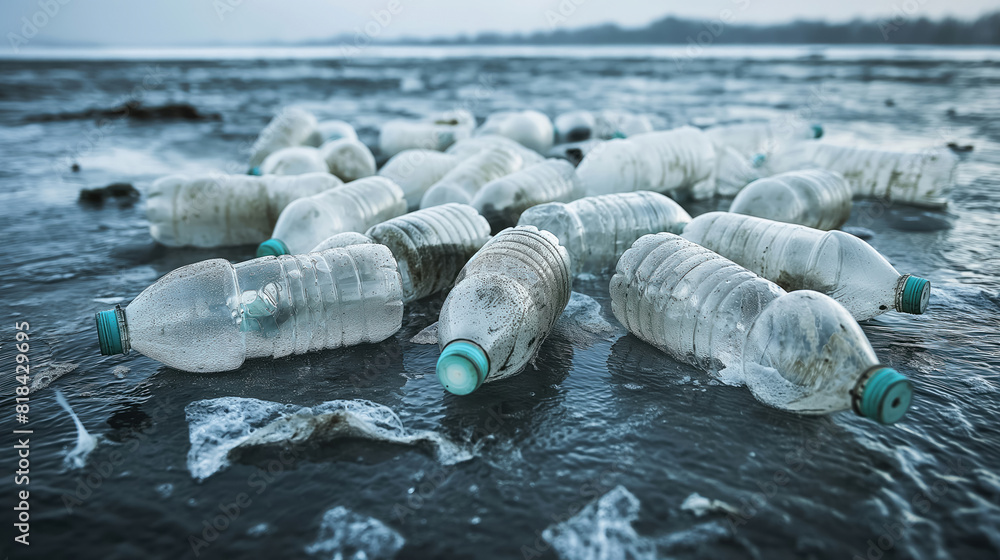
Bottled water is one of the world’s most popular beverages and aids in fighting against the global water crisis.
The bottled water market is the biggest in the Global South which includes the Asia-Pacific, Africa, Latin America and Caribbean regions. These also happen to be the places with the most contaminated water. These specific regions make up 60 percent of all water bottle sales, according to Radio Free Asia.
Water contamination is one of the leading causes of death making up around 3.4 million deaths per year worldwide, with children being the most of that percentage, according to Swacon International Hospital. Bottled water seems like a great solution and product to spread to people living in the Global South, but there are other consequences.
Bottled water companies such as Deer Park and Dasani are classified as spring water, meaning they come from a freshwater spring. Spring water is naturally filtered underground and collected from springs or boreholes.
Alkaline, spring, purified, filtered and many more subgenres of water bottle companies promote different health benefits that are buzzword based. However, what they do not specify is that they are just as bad for the planet whilst trying to help it, which contradicts its purpose entirely.
One out of every five plastic water bottles will end up being recycled, according to The Environmentor, which is not great odds. This means that four out of five end up in landfills totaling 20 billion per year. This waste ultimately ends up being burned and polluted into the sky, fogging the lungs and causing respiratory and other health-related issues.
The overconsumption of water bottles being littered and thrown away also leads to the polluting of our streets and most importantly our oceans.
Trash and other plastics in the ocean are terrible for animal wildlife. Ocean animals such as sea turtles are facing a huge problem as they are now classified as endangered because of these plastics killing them.
Among the many underlying lies these water companies tell you, many water bottle companies fill their bottles with 50 percent local tap water contradicting their promised cleanliness.
Bottled waters are extremely under-regulated and they do not undergo the same testing as other foods and liquids sold.
According to the Natural Resources Defense Council, about one-third of plastic water bottles contain some level of contamination, proving it to not be safer or cleaner than regular tap water contrary to popular belief.
The FDA does not require bottled water companies to use certified laboratories for water quality testing or to report test results. The FDA also does not require bottled water labels to list ingredients and nutritional information either according to the Minnesota Department of Heath.
Sketchy.
An inside look into the eyes of a lash tech, the latest and greatest beauty trend of the decade
Getting your eyelashes extended is now at the same level of luxury as getting your nails and hair done.
The art of eyelash extending is fairly new but fake eyelashes have always been in style.
Women are always looking for new ways to become even more beautiful thus eyelash extensions became a trend.
Some looks are dated back to the early 2000s but accessibility for the everyday average person to get them became popular around early 2020 late 2010s.
Owner of Eyesamor, Leslye Cortes, started her business in 2020 after high school. The name is a blend between the words eyes and the Spanish word “amor” , meaning love.
She started her business after working many jobs post-graduation and wasn’t fulfilled at any of them.
“I am not a fan of working for other people.”
The demand for eyelashes in 2020 was still fresh and she jumped on the bandwagon at the perfect time. Now getting eyelash extensions is just as normalized as going to the nail salon.
“What drives me to continue my business is the idea that one day it’ll be the only true thing that I leave behind.”
Cortes takes pride in her business and chose entrepreneurship because she likes to be in control of her own decisions especially career-wise.
With Cortes being a part of Generation Z she has definitely noticed an increase in businesses being started among the generation.
“I think many people are starting businesses because most will flourish since this is an era where everyone supports creativity. Plus minimum wage is making it hard for people to live off of.”
She uses social media to advertise specifically Instagram. She says social media can be tricky because you have to break into the algorithm and that can be difficult.
“The best way to advertise is through social media, getting brand ambassadors and honestly word of mouth. My clients have done all the marketing for me.”
The way she markets is through the eyes.
When she does a client’s lashes, their eyes are basically a walking billboard. She calls them her brand ambassadors. Her clients also post about where they got their lashes done on their personal social media accounts gaining her even more exposure.
“Being an entrepreneur is rewarding to me because I can create a schedule where I can spend time with my family,” she says.
How to gain 38 extra days in your year
Studies show that the average user accumulates up to two hours and thirty-one minutes is spent scrolling through various social sites.
That is 38 days a year erased spent aimlessly doing nothing productive. There is a myriad of ways to cut out social media however it is challenging because most people unknowingly have an addiction.
Here are some slow approaches to think about.
First, it is best to acknowledge the problem and find a solution that best works. For example, people use social media typically when bored and have nothing to do then when something they need to do comes up like homework, they off-put the task for a while because they are stuck in a scrolling loop. In order to solve this problem, personal boundaries must be set.
Second, set times to use favorite applications. For instance, if social media is distracting in the morning. It is important to make sure that boundaries are set to not use social media until noon.
Another way to ensure the cutting down of social media is staying busy. Find a hobby or learn a new skill to stay busy and distracted. Make sure that free time is spent doing somewhile worthwhile and purposefully enlightening.
Whenever there is an urge to use social media, it is beneficial to think about how much time is being wasted. Around ten percent of the year is averagely wasted where free time is spent scrolling when ten percent of the year can be spent bettering oneself.
In situations like these positive reinforcements are always a good tool to use. Whether the goal is trying to cut out social media for one day out of the week or only using it for thirty minutes a day, it is important to give rewards whenever a goal is completed.
A direct link to the pandemic, small businesses, and Gen Z… a modern success story on two women entrepreneurs
Only six percent of entrepreneurs are between the ages of 20 and 30.
T’Kyzha McKinzy is a theatre arts major who runs a jewelry business, Charmed by Tee Monai, where she sells custom jewelry and accessories. McKinzy started her business as a sophomore in high school.
Naya Alford is a biology major who runs a hair company, Dream Galor Hair Co., where she “sells hair extensions and confidence.”
“I love the idea of being able to switch up my style and change my hair. Hair extensions aren’t just to add length but bring more confidence to what you already have,” Alford says.
Alford first came up with the idea to sell hair extensions freshman year of high school, and then in the summer of 2021, she officially launched her business.
Both women attend Clark Atlanta University and are attacking the pressures of being a student and the struggles of being an entrepreneur with grace.
Alford states that she has an okay balance between work and school and is learning every day.
“I do this by maintaining a positive mindset, taking it day by day, and creating a to-do list every day to create a well-organized workload.”
McKinzy says that she has a good balance of school, work and life by reminding herself why it is so important for her to stay on track.
“I can say at times it does get a little hectic and there are times where I’m so involved with school and extracurriculars I tend to fall behind on my business plans. Whenever I catch myself doing that I also remind myself of why to get back on track.”
Entrepreneurship has increased by 29 percent during the pandemic. It is known that the pandemic shifted society globally and the mindsets of the working class in this economy. Many realized that juggling work, school, family, and free time was draining after the pandemic gave those who hustled every week, a chance to relax. During this time many picked up hobbies, caught up on rest, and started a business.
During the pandemic, the rise of #BuyBlack and #SupportBlackBusinesses (stemming from the police protests), and #BuySmall and #SupportSmallBusinesses (stemming from the economic decline) hashtags and movements created a tighter community for those who had small businesses and those who desired to have their own.
Facebook in May of 2020 began promoting the hashtag #SupportSmallBusinesses encouraging users to share a small business they love.
Why are so many young people creating small businesses?
The direct link between the youth and social media is based on trends. When you see tens of hundreds of small businesses daily on various social apps as opposed to only seeing businesses on your drive to the supermarket or work pre-social media, it is hard to not be influenced.
It has become very normal to see your friends and mutual followers create successful small businesses thus creating a positive community for creative and business-savvy individuals.
As of April 2021, there are 4.33 billion active social media users stretched across all platforms, which totals up to over half of the world’s population. On average users spend around 2.5 hours of the day on apps such as TikTok, Instagram, and Facebook, according to Tech Jury, the days of word-to-mouth, business cards, and newspaper ads are out and the power of social media is in.
So the short answer is, it’s easy with quicker reward.
McKinzy and Alford both agree that it is substantially challenging to have a small business while being in school but also agree that it is very rewarding.
“As an entrepreneur, you have personal and professional freedom, which allows you to manage things a little easier”, Alford says.
“It’s very rewarding, especially at the end of each year… I highlight each state I have received orders from. Just to know that people all over love my products is a different type of feeling”, McKinzy says.
 Keiko Smythe's Writing Samples
Leave a comment